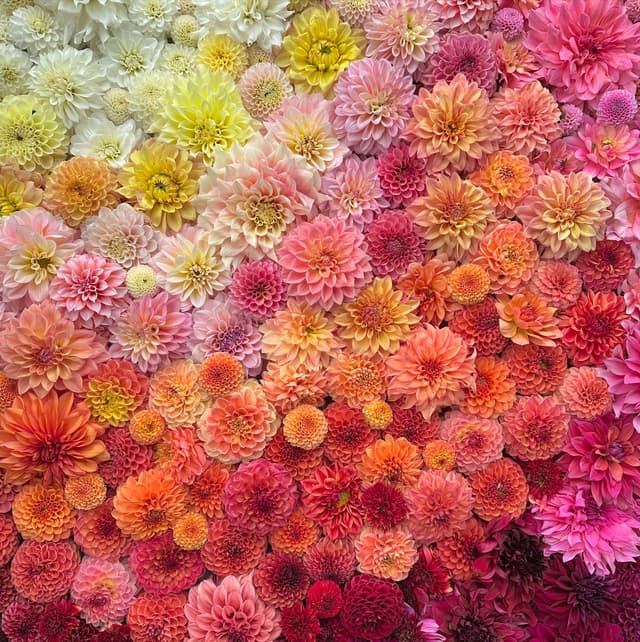
Dahlia Care
Growing dahlias at home is a rewarding way to add color and texture to your garden from midsummer through fall. Check out the tips below!
Not Ready to Plant? Storing Your Tubers
If you receive your tubers before your last frost date, you'll need to store them until it's safe to plant. Dahlias are frost-tender and cannot be planted until after your last frost date and when soil temps reach at least 60°F.
Store tubers in a cool, dark, and dry location—ideally between 40–50°F. A basement, garage, or spare refrigerator works well. Keep them in a breathable bag or box (paper bag, cardboard, or mesh), and check on them periodically to make sure they're not shriveling or rotting.
If a tuber starts to shrivel slightly, a light misting can help plump it back up. If you see any soft spots or mold, remove that tuber from the others to prevent spread.
For more detailed storage advice, check out the Dahlia Doctor's storage guide.
Planting
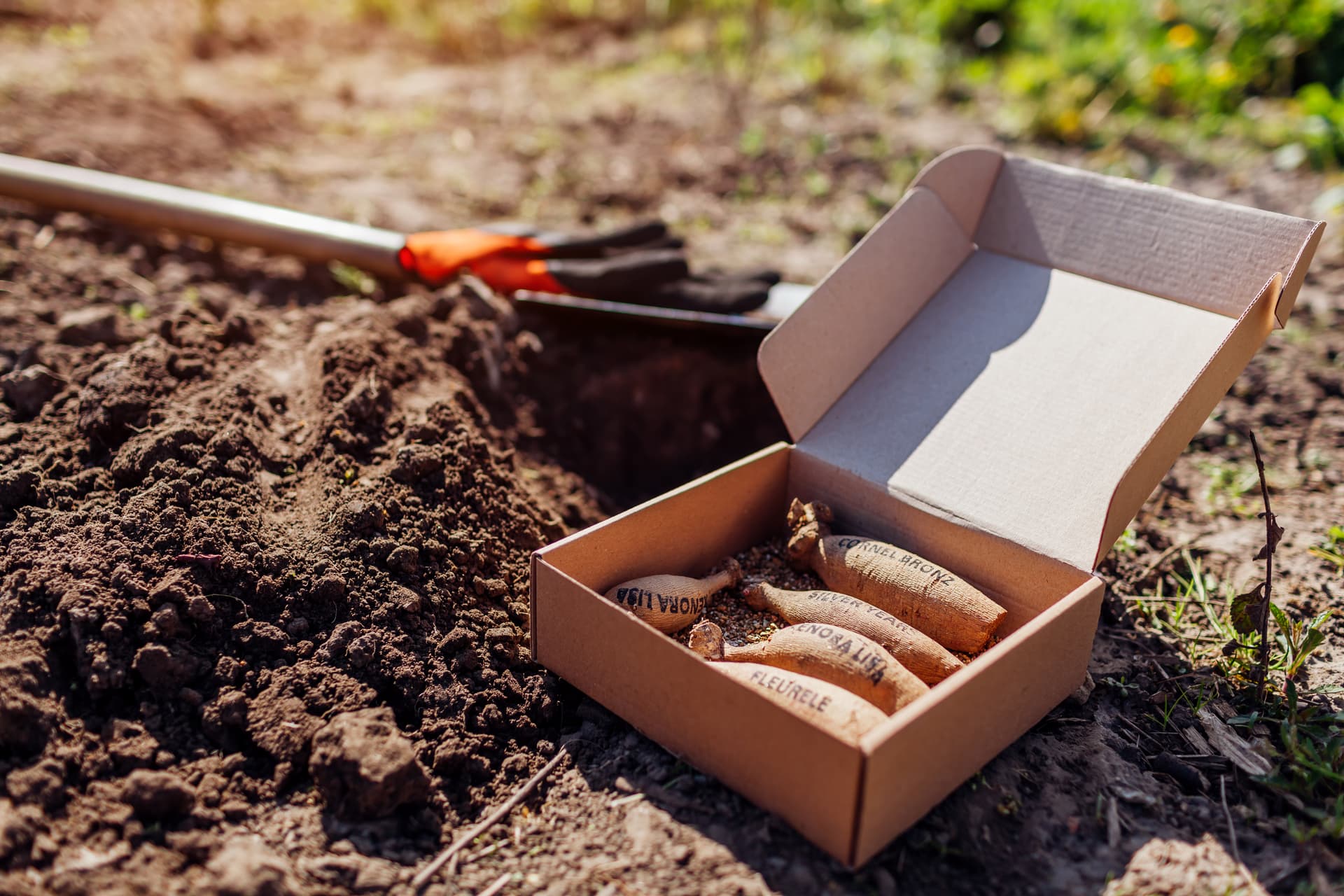
Plant tubers after your last frost date when soil temperatures reach at least 60°F. In most of the US, this is between late April and mid-May.
Choose a location with full sun (6–8 hours daily). Dahlias love heat and light. In hotter climates, afternoon shade helps.
Dig a hole 4–6 inches deep. Place the tuber horizontally with the eye (the little bump near the crown where the stem meets the tuber) facing up. If you can't find the eye, don't worry—plant it crown side up and you'll be fine.
Space tubers 18–24 inches apart. Backfill with soil and water lightly. Do not water heavily until the sprout emerges above ground—overwatering before sprouting is the #1 cause of tuber rot.
Dahlias are slow to emerge. It can take 2–4 weeks before you see any growth above ground. Be patient!
Growing
Pinching: When your dahlia reaches 12–16 inches, pinch out the center growing tip. This encourages bushy, branching growth and more flowers. It feels counterintuitive but makes a big difference!
Staking: Most dahlias need support—they grow tall and their flowers can be heavy. Install stakes early, before you need them. Individual bamboo stakes work for a few plants; t-posts and twine are better for larger plantings.
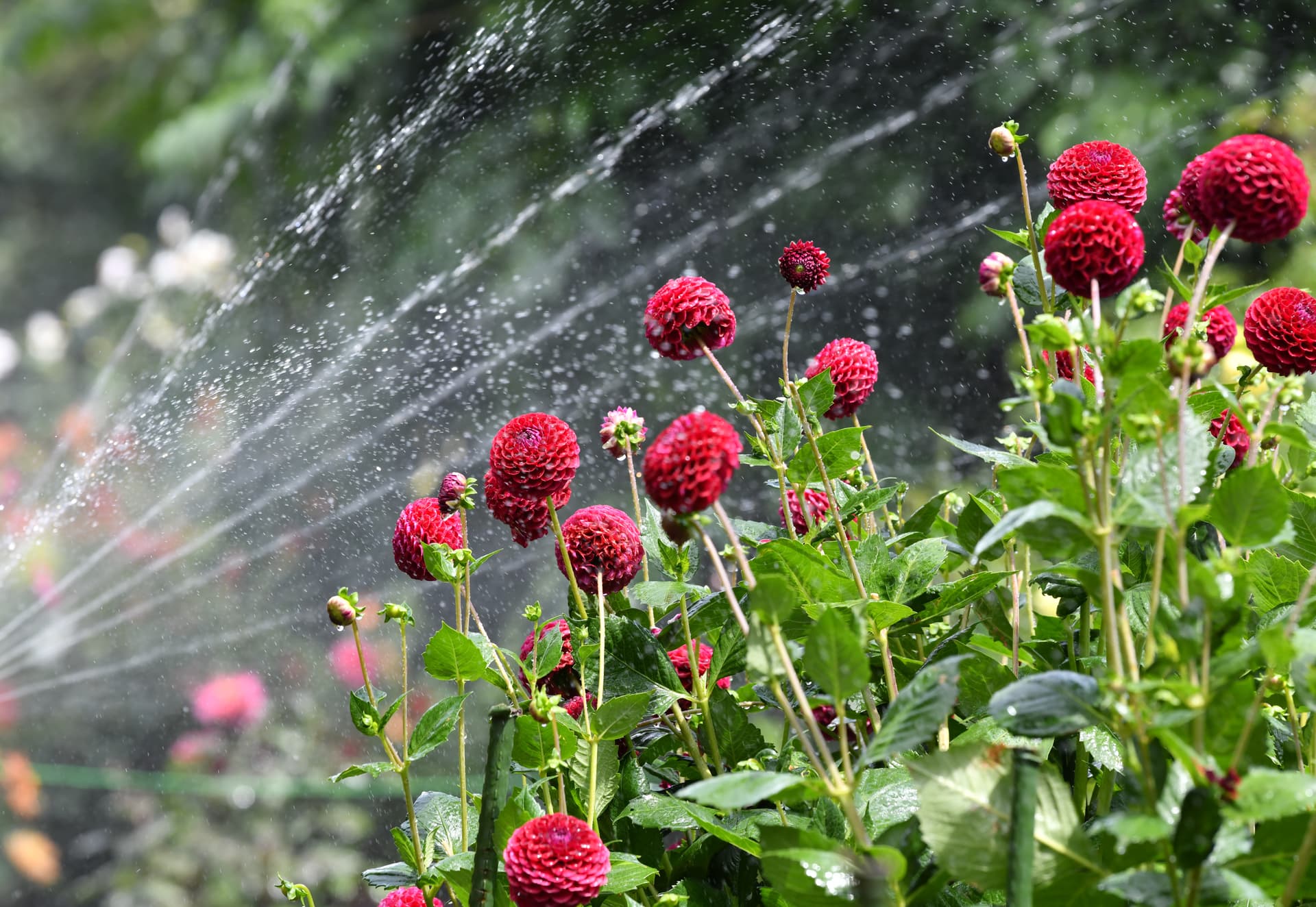
Watering: Once plants are established, water deeply 2–3 times per week. Dahlias need consistent moisture but don't like soggy roots. Avoid overhead watering—wet foliage promotes fungal disease.
Fertilizing: Use a low-nitrogen fertilizer (like a 5-10-10 or similar) to encourage blooms rather than foliage. Too much nitrogen = lots of leaves, few flowers. We fertilize every 2–3 weeks through mid-season.
Harvesting
Cut dahlias in the early morning or evening when temperatures are cooler. Use clean, sharp scissors or snips. Cut stems long—all the way down to a set of leaves or a branching point.
Place cut stems immediately into cool water. Conditioning them in a cool, dark room for several hours (or overnight) before arranging extends their vase life significantly.
Keep cutting! The more you cut, the more your dahlia will produce. Never let flowers go to seed on the plant—deadheading (removing spent blooms) and harvesting both signal the plant to produce more flowers.
Digging & Storing Tubers for Winter
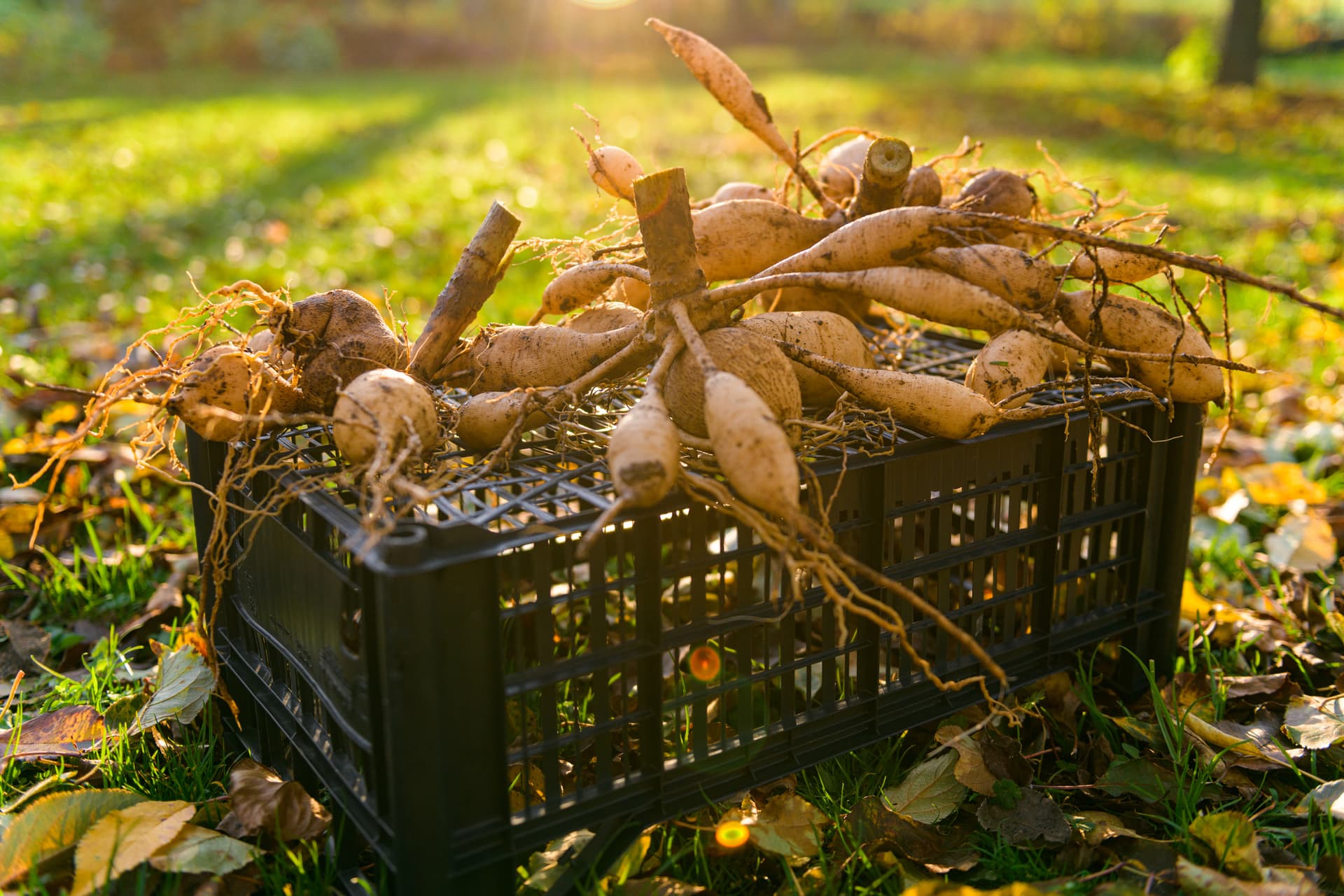
After the first frost blackens your dahlia foliage, it's time to dig your tubers. Wait a week after the frost before digging—the cold helps the skins cure.
Cut the stems down to about 4–6 inches. Gently loosen the soil with a fork or shovel and lift the tuber clump. Brush off excess soil (don't wash them) and let them dry in a sheltered, frost-free area for a few hours to a day.
You can store whole clumps or divide them before storage. Dividing takes time but makes spring planting easier. When dividing, each tuber needs a piece of the crown (the old stem base) with at least one visible eye. Tubers without eyes won't sprout.
Store in a cool, dark location between 40–50°F in barely damp wood chips, peat, or vermiculite to prevent shriveling. Check periodically throughout winter.
For a visual guide to dividing dahlia tubers, watch this video tutorial on YouTube.